Blurt a whole part, and have it checked
The Recall page is the checking step, done for you: write a part of the book from memory, and see each key idea remembered, partly there or left out.
Write what you remember of Types of principalities
Machiavelli says every state is either a republic or a principality. Principalities are hereditary or new. Hereditary ones are easier to keep, because the prince only has to follow the ways of his ancestors and the people are used to his family. New ones are much harder. If you conquer a country with a different language, the ruler should probably stay there for a while. Sending a few settlers is cheaper than keeping soldiers there. He also says to weaken the strong neighbours.
83 words · 05:12
Good start
Of the 5 key ideas in Types of principalities, how much you wrote down.
2 remembered · 2 partly · 1 left out · 83 words · 05:12
You have a good grasp of republics and principalities and hereditary states. Focus your next revision on cities with their own laws, living in a conquered state, and colonies over garrisons.
You remembered · 2
Every state is either a republic or a principality.
A hereditary principality is easier to hold than a new one: the prince need only keep to the ways of his ancestors.
Partly there · 2
A prince who takes a state with a different language and customs should go and live there himself.
You wrote: “the ruler should probably stay there for a while”
Colonies cost less than garrisons and offend only the few whose land they take.
You wrote: “Sending a few settlers is cheaper than keeping soldiers there”
Left out · 1
A city used to its own laws must be ruined, lived in, or left its laws under a few friendly rulers who pay tribute.
Try micro-blurting in 20 seconds
Read a sign from a real book, close it, and put its key terms back from memory. The sign returns to check you.
Loading the demo world…
Number keys to place a word, Backspace to take it back, Enter to lock in.Tap the words into the blanks, then Lock in.
How to blurt
Three moves and a blank page.
Read one chunk
A section or a page, not a chapter: the unit has to fit in one recall. Read it to understand, not to memorise, and put it away.
Close it and blurt
On a blank page, write everything you remember for five to ten minutes: facts, terms, links between them. Mark what feels shaky. No peeking.
Check and fill the gaps
Open the source, or run the Recall check, and mark what was missing or wrong. Fix it, then blurt the same chunk again after a break, and once more days later.
Is your textbook already here?
Find it, play it free in your browser, write its parts from memory and get them checked, or blurt it sign by sign. Not here yet? Upload yours.
Showing the books in English. Books in other languages

The Prince
by Niccolò Machiavelli
- Self-development
- Leadership
- Political power
A Renaissance guide to acquiring and holding political power, examining how princes balance force and cunning, generosity and fear, fortune and skill. In this world you practise reading real situations of rule, conquest, and loyalty, and choosing the pragmatic action that secures lasting power.
EN311 characters · Play

The Art of War
by Sun Tzu
- Self-development
- Intelligence gathering
- Leadership
An ancient Chinese military classic on strategy, deception, terrain, and leadership, teaching that victory comes from intelligence and positioning rather than brute force. In this world, you practise assessing strengths and weaknesses, reading terrain and enemy signals, timing attacks, and leading troops with a balance of discipline and care.
EN151 characters · Play

Concepts of Biology
by Charles Molnar
- Biology
- Animal physiology
- Cell biology
This book covers the core principles of biology, from cell structure and metabolism to genetics, molecular biology, and animal physiology. In this world, you practise connecting mechanisms like DNA replication, immunity, and organ systems to how living things actually function and survive.
EN366 characters · Play

Blue Ocean Strategy: How to Create Uncontested Market Space and Make the Competition Irrelevant
by W. Chan Kim and Renée Mauborgne
- Startups
- Business strategy
- Leadership
This book shows how companies break free from cutthroat competition by creating new market space instead of fighting over existing demand, using tools like the strategy canvas and the four actions framework. In this world you practice mapping value curves, reaching noncustomers, sequencing price and cost decisions, and overcoming organizational hurdles to execute bold strategic moves.
EN301 characters · Play

High Output Management
by Andrew S. Grove
- Productivity
- Startups
- Business strategy
Andrew Grove's classic distills managerial work into production principles: leverage, output, and the systems that make teams effective. In this quiz world you practise planning, running one-on-ones and reviews, delegating with accountability, and designing processes that catch problems early and motivate real performance.
EN441 characters · Play

$100M Offers: How to Make Offers So Good People Feel Stupid Saying No
by Alex Hormozi
- Startups
- Business strategy
- Market innovation
A practical guide to building offers so compelling that price stops being an objection, covering value creation, guarantees, scarcity, urgency, and bonuses. In this world you practice calculating lifetime value, deconstructing the value equation, and assembling all the pieces into a single Grand Slam Offer.
EN226 characters · Play
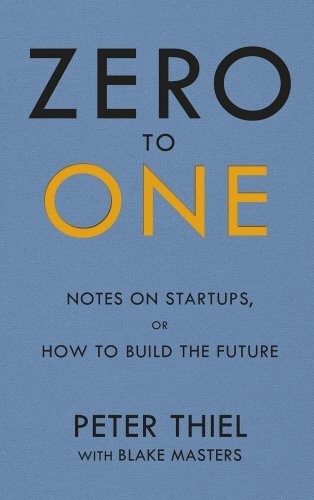
Zero to One: Notes on Startups, or How to Build the Future
by Peter Thiel
- Startups
- Business strategy
- Leadership
Peter Thiel argues that true progress comes from creating something genuinely new rather than copying what already works, and shows how monopolies, strong founding teams, and definite plans drive lasting success. In this world you practice spotting hidden opportunities, building a founding team with real cohesion, and designing sales and distribution strategies that actually work.
EN291 characters · Play

What They Don't Teach You at Harvard Business School
by Mark H. McCormack
- Productivity
- Startups
- Assertiveness
A veteran deal-maker distills the unwritten rules of business savvy: reading people, negotiating with leverage, managing time, and shaping perceptions. Players practice sizing up situations, handling office politics, and building client trust through practical, street-smart tactics rather than textbook theory.
EN96 characters · Play

The Personal MBA: Master the Art of Business
by Josh Kaufman
- Startups
- Business strategy
- Leadership
A practical guide to the core ideas behind value creation, marketing, sales, finance, and systems thinking that drive any successful business. Explore twenty-three worlds covering everything from customer psychology to financial statements, and practice applying timeless mental models to real decisions.
EN626 characters · Play

Make: The Indie Startup Manual
by Pieter Levels
- Startups
- Business strategy
- Market innovation
A practical guide to building a solo internet startup from personal problem to profitable exit, written by the maker behind Nomad List and Remote OK. You'll practise spotting ideas from your own life, launching without hype, growing organically, monetizing directly, automating operations, and negotiating a sale.
EN261 characters · Play

Founding Sales
by Pete Kazanjy
- Startups
- Business strategy
- Leadership
A practical guide to building an early-stage sales function from scratch, covering mindset, prospecting, narrative, negotiation, and hiring. Play through founder-led selling: crafting a compelling story, handling objections, managing pipeline, and scaling a repeatable go-to-market process.
EN121 characters · Play

The Mom Test: How to Talk to Customers and Learn if Your Business is a Good Idea When Everyone is Lying to You
by Rob Fitzpatrick
- Startups
- Business strategy
- Customer validation
A practical guide to running customer conversations that surface truth instead of polite lies, so you can validate a business idea before building the wrong thing. In this world you practice spotting empty compliments, anchoring vague claims into specifics, finding the right people to talk to, and steering conversations toward real commitments.
EN146 characters · Play

Traction: How Any Startup Can Achieve Explosive Customer Growth
by Gabriel Weinberg and Justin Mares
- Startups
- Business strategy
- Customer validation
This book distills how startups find their first customers and scale growth, covering 19 traction channels and the Bullseye framework for testing and prioritizing them. In this world you practice choosing, testing, and doubling down on the channels that actually move the needle for your business.
EN311 characters · Play

The Subtle Art of Not Giving a F*ck
by Mark Manson
- Self-development
- Assertiveness
- Boundaries
This book argues that a good life comes not from chasing endless positivity but from choosing your struggles and values with care. Through Mark Manson's blunt, story-driven philosophy, you'll practice telling meaningful problems from trivial ones, taking responsibility without blame, and facing failure and mortality as sources of clarity rather than fear.
EN176 characters · Play

Deep Work: Rules for Focused Success in a Distracted World
by Cal Newport
- Productivity
- Self-development
- Concentration
Cal Newport argues that the rare ability to focus without distraction is becoming increasingly valuable, and shows how to cultivate it. Explore rituals from Carl Jung to modern professionals, and practise strategies like scheduling, shutdown routines, and cutting shallow work to build lasting concentration.
EN136 characters · Play

How To Win Friends and Influence People
by Dale Carnegie
- Communication skills
- Self-development
- Conflict resolution
A classic guide to human relations, teaching how to make friends, win people over, and lead without causing resentment through honest appreciation and genuine interest. Players practice recognizing key techniques through real stories about historical figures, salespeople, and everyday encounters.
EN816 characters · Play

Thinking in Systems: A Primer
by Donella H. Meadows
- Self-development
- Business strategy
- Leadership
A clear guide to how stocks, flows, and feedback loops shape everything from thermostats to economies. In this world you practice spotting system traps like escalation and eroding goals, and learn to find the leverage points that create lasting change rather than quick fixes.
EN161 characters · Play

Peak: Secrets from the New Science of Expertise
by Anders Ericsson and Robert Pool
- Productivity
- Self-development
- Concentration
This book explains how deliberate practice, not innate talent, builds extraordinary ability in music, chess, sports, and everyday skills. In this world you practice identifying strong mental representations, structuring focused feedback loops, and applying purposeful training to your own goals.
EN156 characters · Play
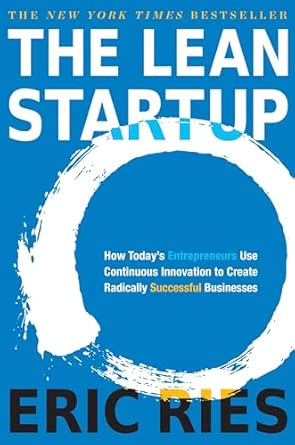
The Lean Startup
by Eric Ries
- Startups
- Business strategy
- Customer validation
This book explains how startups can use validated learning, rapid experimentation, and the Build-Measure-Learn loop to build products people actually want, instead of following rigid business plans. In this world you practise identifying leap-of-faith assumptions, designing MVPs, reading actionable metrics, and deciding when to pivot or persevere.
EN156 characters · Play

Principles: Life and Work
by Ray Dalio
- Productivity
- Self-development
- Conflict resolution
Ray Dalio distills the life and management principles behind his personal journey and Bridgewater's success, covering radical truth, meaningful relationships, and systematic decision-making. In this world you practise embracing reality, using the 5-step process, weighing believability, and diagnosing problems to build your own effective machine.
EN161 characters · Play

The Almanack of Naval Ravikant: A Guide to Wealth and Happiness
by Eric Jorgenson
- Self-development
- Business strategy
- Internal locus of control
A collection of Naval Ravikant's tweets, essays, and interviews on building wealth through leverage and specific knowledge, and finding happiness through presence and acceptance. Players practice applying his principles: recognizing forms of leverage, judging long-term partnerships, and building daily habits for a calmer, clearer mind.
EN406 characters · Play

The ONE Thing: The Surprisingly Simple Truth Behind Extraordinary Results
by Gary Keller and Jay Papasan
- Productivity
- Self-development
- Concentration
This book explains why narrowing your focus to a single priority produces better results than juggling many goals, and dismantles common myths about willpower, balance, and multitasking. In this game world you practice asking the Focusing Question, time blocking your most important work, and building the habits that protect your ONE Thing.
EN181 characters · Play
Atomic Habits: An Easy & Proven Way to Build Good Habits & Break Bad Ones
by James Clear
- Self-development
- Deliberate practice
- Internal locus of control
This book explains how tiny, consistent changes compound into remarkable results, using the Four Laws of Behavior Change to build good habits and break bad ones. In this world you practice designing your environment, stacking habits, tracking progress, and using identity-based thinking to make lasting change stick.
EN161 characters · Play

Think Faster, Talk Smarter: How to Speak Successfully When You're Put on the Spot
by Matt Abrahams
- Communication skills
- Self-development
- Concentration
A practical guide to mastering impromptu speaking, from calming nerves to structuring thoughts on the fly. You'll practice frameworks for toasts, pitches, feedback, and apologies while learning to listen actively and speak with authentic confidence in any unplanned moment.
EN161 characters · Play
How to Succeed in MrBeast Production - Jimmy Donaldson
by Jimmy Donaldson
- Productivity
- Self-development
- Leadership
An internal playbook distilling a decade of lessons on making high-retention YouTube videos, from ideation and hooks to production logistics and team culture. In this world you practice spotting virality metrics, crafting strong hooks, structuring formats for retention, and running a production with clear communication and priorities.
EN91 characters · Play

The Adweek Copywriting Handbook
by Joseph Sugarman
- Startups
- Copywriting
- Customer validation
Sugarman breaks down the psychology behind persuasive writing, from crafting irresistible first sentences to triggering the 31 buying motivators that drive purchases. Players practice building buying atmospheres, overcoming objections, and structuring copy that flows like a slippery slide toward the sale.
EN161 characters · Play
How StudyRPG does it
The blank page is the Recall check above; in the game the same loop runs small, one sign at a time, inside a world built from your book.
Micro-blurting after a sign
Read a sign, close it, and put its key terms back from a word bank, so it is quick on a phone. The sign returns to show what you missed.
Flashcards with no options
The front of a card asks and shows no answers. Say the answer in your head, flip, and grade yourself honestly; the deck schedules the card from that.
Missed questions come back
What you got wrong is asked again in rematches and boss fights, and a card graded Again returns within minutes. Practice goes where the gaps are.
Every answer explained
Right or wrong, each answer is followed by the right one and why: the checking step of blurting, done for you on the spot, after every question.
Why blurting works
Blurting is retrieval practice with a pen. Four findings from the research on learning, and the mechanic that applies each one.
Writing what you remember beats rereading
One blurt after a read beats a second read.
Students who read a passage and then wrote down what they remembered recalled more of it a week later than students who read it twice.
Roediger & Karpicke, 2006It beats a concept map too
A blank page outdoes studying with the text open.
After one read, writing down what they remembered gave students more a week later than drawing a concept map with the text in front of them, on facts and on inferences alike.
Karpicke & Blunt, 2011Checking the page fixes the gaps
After a blurt, the sign comes back; after an answer, the explanation.
Feedback after a recall attempt raises what you keep, and not only where you were wrong: it also fixes the right answers you were unsure of, which slip away first.
Butler, Karpicke & Roediger, 2008Come back to it
Missed questions return, and flashcards are scheduled over days.
Across 317 experiments, spaced study beat one sitting, and the best gap grew with how long the memory had to last. Blurt again tomorrow, not in the same hour.
Cepeda et al., 2006- Roediger & Karpicke (2006). Test-enhanced learning: taking memory tests improves long-term retention. Psychological Science, 17(3), 249–255.
- Karpicke & Blunt (2011). Retrieval practice produces more learning than elaborative studying with concept mapping. Science, 331(6018), 772–775.
- Butler, Karpicke & Roediger (2008). Correcting a metacognitive error: feedback increases retention of low-confidence correct responses. Journal of Experimental Psychology: Learning, Memory, and Cognition, 34(4), 918–928.
- Cepeda, Pashler, Vul, Wixted & Rohrer (2006). Distributed practice in verbal recall tasks: a review and quantitative synthesis. Psychological Bulletin, 132(3), 354–380.
When another tool fits better
Three cases where you want something else.
You have not learnt it yet
Blurting tests what you have met once; it does not teach a first time. Read the chunk properly before you close it, or the page stays blank.
Essays and problem sets
For an argument or a calculation, a worked problem beats a word bank, and the Recall check grades ideas, not reasoning. Write the essay on paper; check the ideas in it here.
Cramming for tomorrow
Blurting earns its keep over days: the second and third rounds are where it sticks. With an exam in the morning, grade straight through the flashcard deck instead.
Built on real books
Live numbers, straight from the database.
Questions
What is the blurting method?
Does the blurting method actually work?
How long should a blurt take?
What is the difference between blurting and active recall?
Blurting or flashcards?
Is micro-blurting real blurting?
Can StudyRPG check my blurt?
Does it work for my subject?
Is it free?
See also
Free to start
Play the free worlds for as long as you like. Go Pro when you want your own books in, from $4.99 a week.
- Unlimited play on free public worlds
- A taste of premium worlds: 5 battles, 10 tower questions and 10 mini-game questions each
- All six modes, duels and Tower Defense included, on any device
- 250 tokens per weekAbout 1 note of 1,000 wordsUsage resets every week
- Every premium world
- Unlimited play
- Full book mindmaps
Renews every week until you cancel.
Cancel anytime
Choose Exam Sprint- 1,000 tokens per monthAbout one document of 10,000 words, or 5 notes of 1,000 wordsUsage resets every month
- Every premium world
- Unlimited play
- Full book mindmaps
Renews every month until you cancel.
Cancel anytime
Choose Study Quest- 1,000 tokens per monthAbout one document of 10,000 words, or 5 notes of 1,000 wordsUsage resets every month
- Every premium world
- Unlimited play
- Full book mindmaps
Charged upfront. Renews every year until you cancel.
Cancel anytime
Choose Scholar’s Journey- 1,000 tokens per monthAbout one document of 10,000 words, or 5 notes of 1,000 wordsUsage resets every month
- Every premium world
- Unlimited play
- Full book mindmaps
100 of 100 spots left · 25 spots left at this price, then $149.99
One payment, no renewal. Lifetime means the lifetime of the StudyRPG service.
- 1,000 tokens a month (250 a week on Exam Sprint) to turn your own books and notes into games: about one document of 10,000 words, or 5 notes of 1,000 words
- Unlimited battles on every world
- Unlimited mini-game questions on every world
- Duels on every map of every premium world
- Every premium world, every map, all six modes
- The whole mindmap of every book, not just a sample
- Your own flashcards in any world (up to 200)
- Study timer extras: room themes, window views, pets and focus insights
- All future updates included
Use your allowance across books, PDFs, booklets, and notes. Each upload is priced in tokens by what its game is built with, shown before it starts. Unused tokens don’t roll over.
Secure payment via Stripe. Cancel a subscription anytime: it stays active until the end of the period you paid for. Then the worlds made with its tokens stay saved as a free preview until you subscribe again.
Close the book. Open the map.
Upload the chapter, write it from memory and get it checked, then blurt it sign by sign in the game.